Originally Published: July 29, 2016 | Last Updated: November 20, 2026
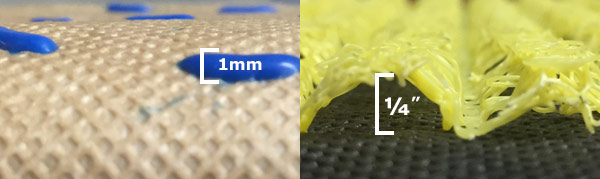
The main difference between HydroGap Drainable Housewrap and Slicker Classic rainscreen is the size of the gap that each provides. Both allow water to drain, butthe wider gap Slicker Rainscreen creates adds ventilation that promotes drying.
HydroGap Housewrap vs. Slicker Rainscreen: At-a-Glance
| Product | HydroGap Drainable Housewrap | Slicker Classic Rainscreen |
| Drainage gap | 1 mm | 1/4 inch (6 mm) |
| Primary function | Drainage | Drainage and ventilation |
| WRB function | Yes | No; separate WRB required |
What Is Slicker Rainscreen?
Slicker Classic is a true rainscreen, meaning that it provides a 1/4-inch (6mm) gap between the sheathing and the cladding. This 1/4-inch gap allows for both drainage AND continuous airflow (drying). Slicker Classic by itself does not act as a WRB (water-resistive barrier), so it needs to be installed along with BenWrap housewrap.
Slicker Rainscreen is recommended as best practice in areas with wind-driven rain, especially when using water-absorptive claddings such as fiber cement or wood.
Free Slicker® Rainscreen Sample
See how Slicker® Rainscreen helps promote drainage and ventilation behind exterior cladding.
What Is Slicker MAX Rainscreen?
Slicker MAX is a filtered rainscreen option for stucco and adhered stone veneer assemblies. It provides a 1/4-inch drainage and ventilation space along with an attached filter fabric that helps keep mortar droppings out of the drainage cavity. Like Slicker Classic, Slicker MAX must be installed with a separate water-resistive barrier. Learn more about Slicker MAX Rainscreen.
What Is HydroGap Drainable Housewrap?
HydroGap Drainable Housewrap provides a 1mm drainage gap between the sheathing and cladding, helping bulk water drain away from the wall assembly. While this gap supports drainage, it does not provide the same drying and ventilation capabilities as a dedicated rainscreen system. HydroGap also functions as a weather-resistive barrier (WRB) and meets applicable housewrap testing requirements.
HydroGap can be used behind cladding types such as wood, fiber cement, vinyl, stone, and stucco in assemblies where a dedicated rainscreen is not required. For projects that call for additional drainage, drying, and ventilation behind the cladding, a rainscreen product such as Slicker Classic may be more appropriate. Product selection should be based on the cladding manufacturer’s requirements, applicable building codes, and the moisture management needs of the wall assembly.

Free HydroGap Drainable Housewrap Samples
Discover how HydroGap® Drainable Housewrap helps manage moisture and promote drainage behind exterior cladding.
What Is HydroGap SA?
HydroGap SA combines a WRB with a 1mm drainage space, like traditional HydroGap, but also includes a continuous acrylic adhesive for air-sealing performance. Both provide integrated drainage, while Slicker Classic offers a larger 1/4-inch space for drainage and ventilation but requires a separate WRB. Learn more about HydroGap SA.
Which Option Fits Your Wall Assembly?
HydroGap and HydroGap SA combine a WRB and drainage in one layer, while Slicker Classic provides a larger space for ventilation and drying and requires a separate WRB. The right choice depends on cladding, climate, assembly design, and applicable installation requirements. Review the product instructions before selecting a system.