Windows are one of the trickiest and most vulnerable areas of the building envelope, and within that, the sill corners need particular care. It’s critical to follow manufacturer instructions and building science best practices when flashing window corners to ensure water cannot enter the system and become trapped.
As part of a wall system’s moisture management strategy, flashing at window openings to create a sill pan establishes a pathway for moisture to drain out and away. Benjamin Obdyke offers three approaches to sill corners to achieve proper sequencing with ease. (This is just a snippet of WRB and flashing instructions. Always follow full instructions, which can be downloaded here.)
Sill Flashing Option 1: Flashing Tape
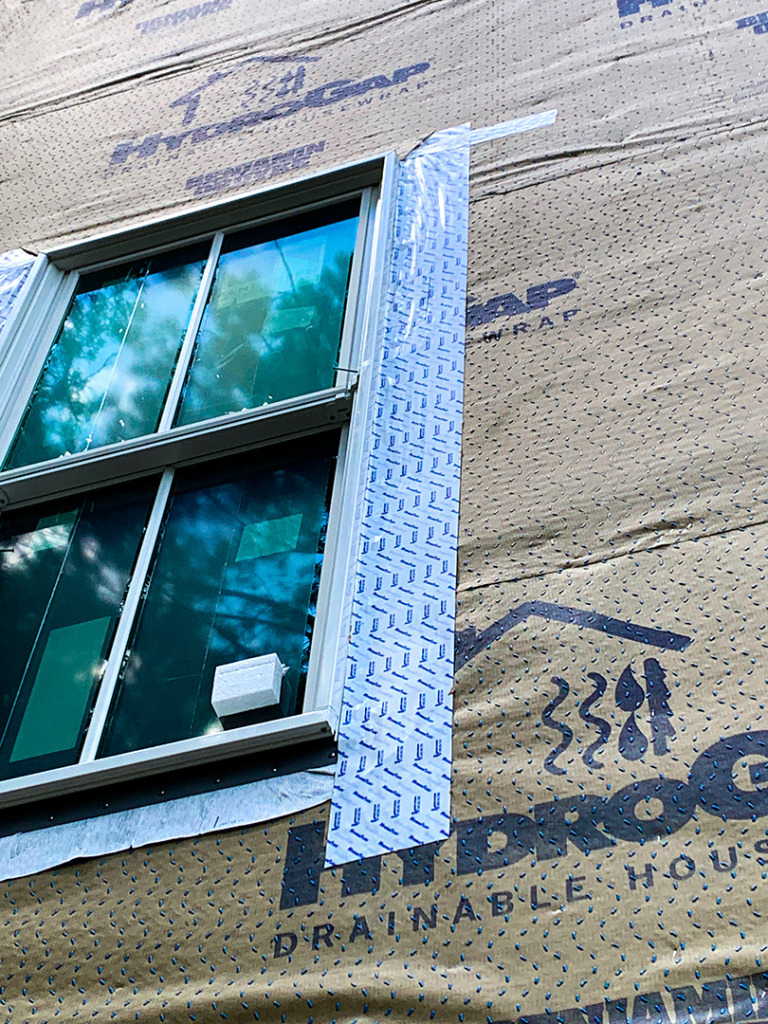
An acrylic-based flashing tape like HydroFlash GP provides an aggressive adhesion to the housewrap and can be installed down to 25 degrees F.
After the housewrap has been properly installed over the window rough opening using a modified I-cut, ensure the surface is clean and dry. Install a starter strip of 6” HydroFlash GP flush with the window sill, and 6 inches past the rough opening on either side of the jamb. Use a hand applicator or roller when applying HydroFlash GP products to ensure full adhesion.
It’s optional to install a sloped sill or back dam (optimal slope .25 inches), except when using approved pre-manufactured sill pan.
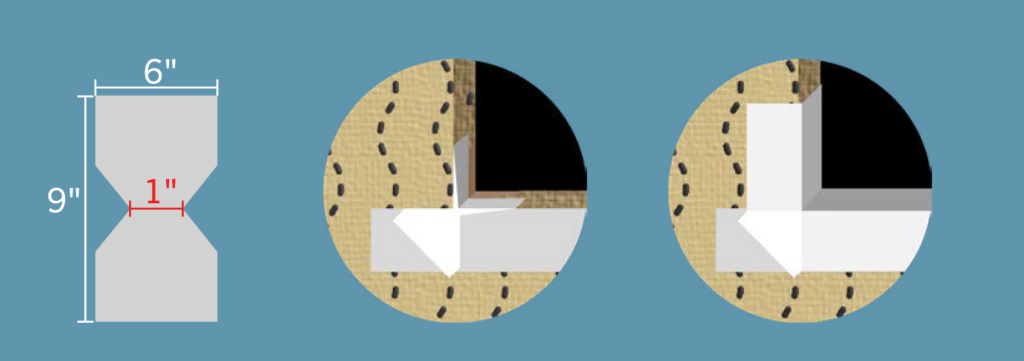
To conform the flashing in the sill corners, create “corner patches” or “bow-ties” as shown below. To speed the process, a crew member can pre-make the bow-ties using an assembly-line process on the ground rather than one at a time up on the ladder. Then finish creating the sill pan by placing a 6” GP piece 6” up the side of the jamb and across the sill.
HydroFlash® Samples
GET YOUR FREE HYDROFLASH® SAMPLES TODAY
Sill Flashing Option 2: Pre-Fabricated Corners
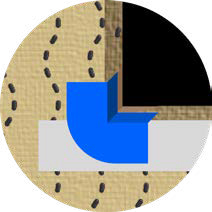
To speed up installation, installers can used HydroCorners at the sill corners instead of making bow-ties out of flashing tape. The prefabricated pieces easily fit into window corners to provide a reliable layer of protection against moisture, and they resist cracking in cold weather.
To install, set a HydroCorner in a bead of sealant in each sill corner and fasten with a staple.
Sill Flashing Option 3: Liquid-Applied Flashing
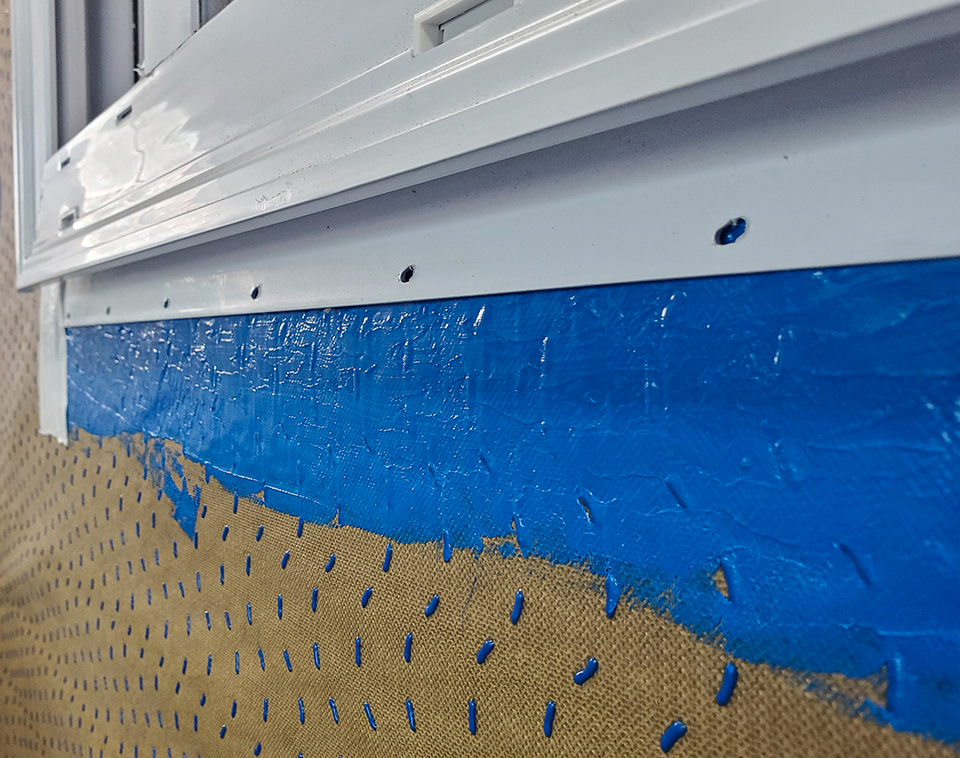
A liquid-applied flashing like HydroFlash LA can be a faster approach for non-linear areas like the sill and corners. HydroFlash LA creates a monolithic seal and eliminates tricky overlaps. Coat the whole sill.
Using HydroFlash LA With Mechanically Fastened Housewraps
For mechanically fastened housewraps, fold the housewrap at the jambs, sill, and header and temporarily fasten.
Like with flashing tape, you have the option to install a sloped sill or back dam (optimal slope .25 inches), except when using approved pre-manufactured sill pan.
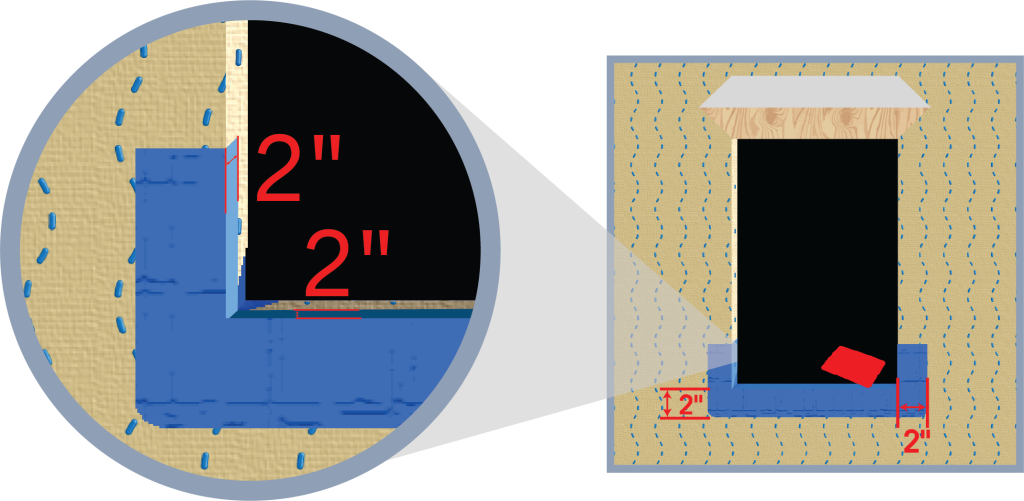
Next, apply a bead of HydroFlash LA to the sill and use a hand applicator to apply 20-40 mil thickness on the entire sill and 6 inches up each jamb. Apply a minimum of 2 inches of HydroFlash LA from the exterior face of the sill and jamb.
Fold the jamb and sill flaps onto the applied HydroFlash LA and smooth with an applicator. Fasten the housewrap to the top of the jamb.
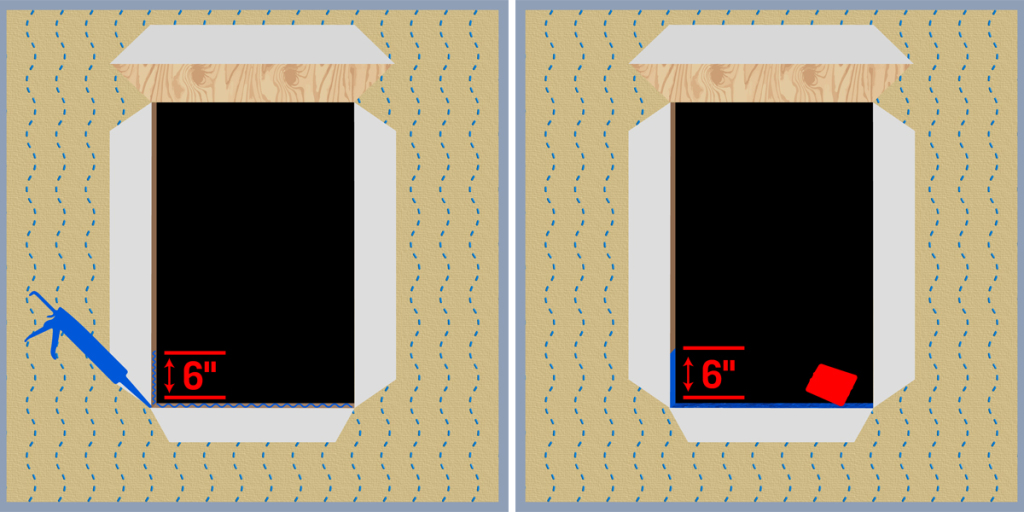
Then, repeat the steps on top of the housewrap by applying a bead of HydroFlash LA to the housewrap-covered sill and use a hand applicator to apply 20-40 mil thickness on the entire sill and 6 inches up each jamb. Apply a minimum of 2 inches of HydroFlash LA into the rough opening and onto the face of the housewrap.
As an optional step, install HydroCorners on top of the freshly applied HydroFlash LA and allow to wet-set to the corners of each sill.
Once the HydroFlash LA is tack free (within 2-3 hours of initial lay-down), you may place the nail-fin window into the opening and complete the rest of the window installation.
Using HydroFlash LA With Self-Adhered Housewraps
If your housewrap is self-adhered, such as HydroGap SA, you can skip the first wet-set step above, in which an initial layer of HydroFlash LA is applied to the sheathing and the housewrap laid on top. Apply HydroFlash LA to the housewrap-covered sill as directed above.
A Systems Approach to Flashing
Flashing window corners is just one component of the wall envelope system, and flashing should be installed with consideration for how its application affects the wall’s ability to control air and moisture and maintain continuity from one area to another. Ensure subcontractors are clear on proper sequencing so that moisture travels down and away, rather than getting trapped.
For full housewrap and flashing instructions, visit our Resources page.
Get more installation resources and tips in our Video Gallery.