Air barriers and vapor barriers cause a lot of confusion for product specifiers and installers. Understanding the differences and which goes where is critical for creating high-performance, properly functioning building envelopes that do not misdirect or trap moisture.
One material could do many different things, but choosing the right material requires knowing which material is doing what. In the building envelope, it’s all about ensuring consistency and continuity through all four control layers (air, vapor, water, and thermal) on all sides of the building.
Air Barriers vs. Vapor Barriers: What’s the Difference?
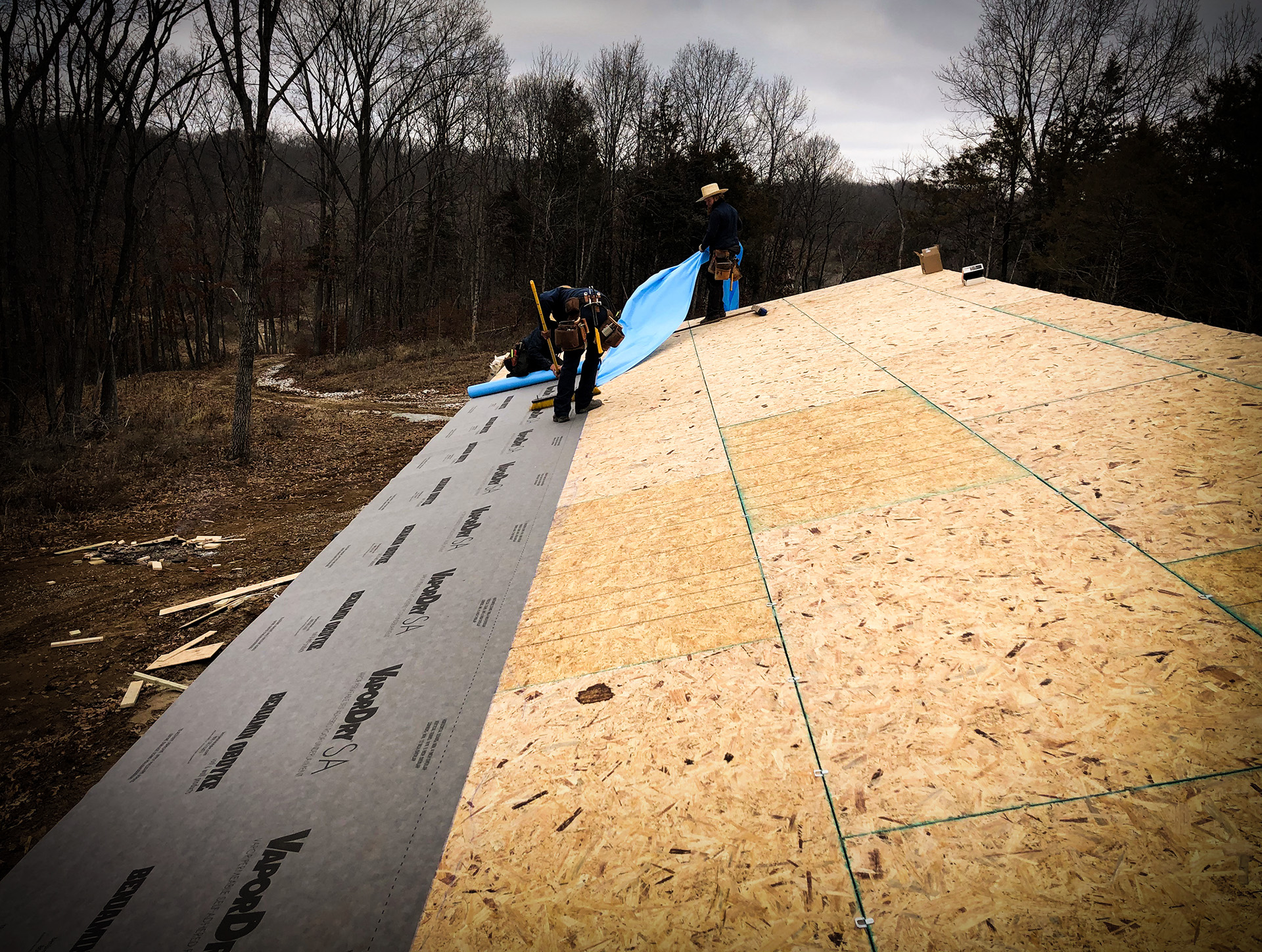
In simplest terms, air barriers and vapor barriers do exactly as their names suggest: Air barriers are used to stop the movement of air through an assembly, while vapor barriers are used to stop the movement of vapor through an assembly.
They often look very similar in that they both typically come in the form of sheets or liquid-applied membranes. The key difference is in how they’re made and what they’re made of, which contributes to their permeability in allowing vapor to diffuse through them.
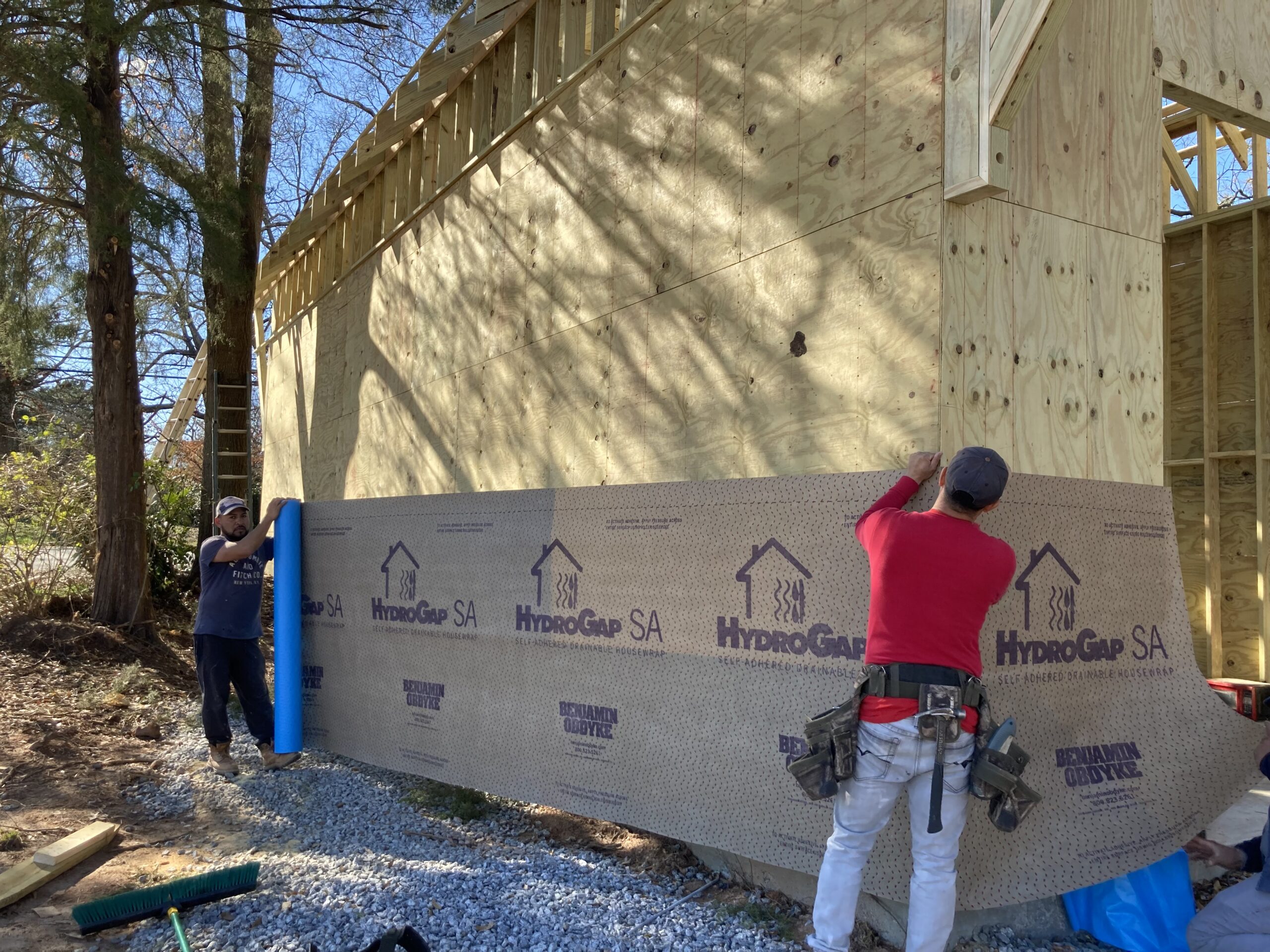
Air barriers block uncontrolled air flow between the exterior and the interior of the structure. They can be installed on the interior or exterior of the wall assembly. Multiple air barriers can be beneficial to provide backup.
People often refer to housewraps as vapor barriers; but they are not one and the same. Housewrap that functions as an air barrier is almost never the vapor barrier.
Vapor barriers prevent nearly all vapor transfer. Since vapor barriers completely block moisture, it’s not as common to use them in above-ground wall systems where we want moisture to be able to move and dry out. Instead, vapor barriers are typically used only in colder climate zones, in below-grade spaces, and on the interior side of the assembly.
Unlike air barriers, where redundancy can be helpful, multiple vapor barriers should not be used because this could create a “vapor lock” that traps moisture within the assembly with no way to dry out.
Can a Product Be Both an Air barrier and a Vapor Barrier in One?
Vapor is moisture/water in a gaseous state, and thus is transported through air. Vapor diffusion occurs when the gaseous moisture/water migrates through a solid material. Most vapor barriers can be detailed in such a way (including sealing seams, penetrations, and termination points) that they can also function as an air barrier. But because most air barriers are vapor permeable, they typically cannot also function as a vapor barrier.
When Should You Use a Vapor Barrier vs. an Air Barrier?
When specified as part of a systems-designed wall assembly, air barriers and vapor barriers used together can create a very air-tight assembly. Individually, a vapor barrier will block vapor from entering the assembly from the interior, and a vapor-permeable air barrier on the exterior side will allow moisture in the assembly to dry out.
Contractors should work with the product manufacturers and design professionals to determine the best systems approach that is mindful of the vapor profiles of all the components in the assembly. For example, insulation plays a huge role in the assembly. Spray foam can be a vapor barrier, but its installation may create pathways for vapor to pass through. Blown-in or dense-pack insulation will need a vapor barrier installed on the interior in cold climates that is also strong enough to hold the insulation in place.
What Makes Benjamin Obdyke Air Barriers and Vapor Barriers Unique?
All Benjamin Obdyke air barriers are vapor permeable, with a vapor permeance ranging from 10-16 perms. Each membrane is subjected to (ASTM E-2178) air permeance testing, with ideal results. Our self-adhered membranes self-seal around fasteners (ASTM D-1970 pass), which provides an even tighter air barrier.
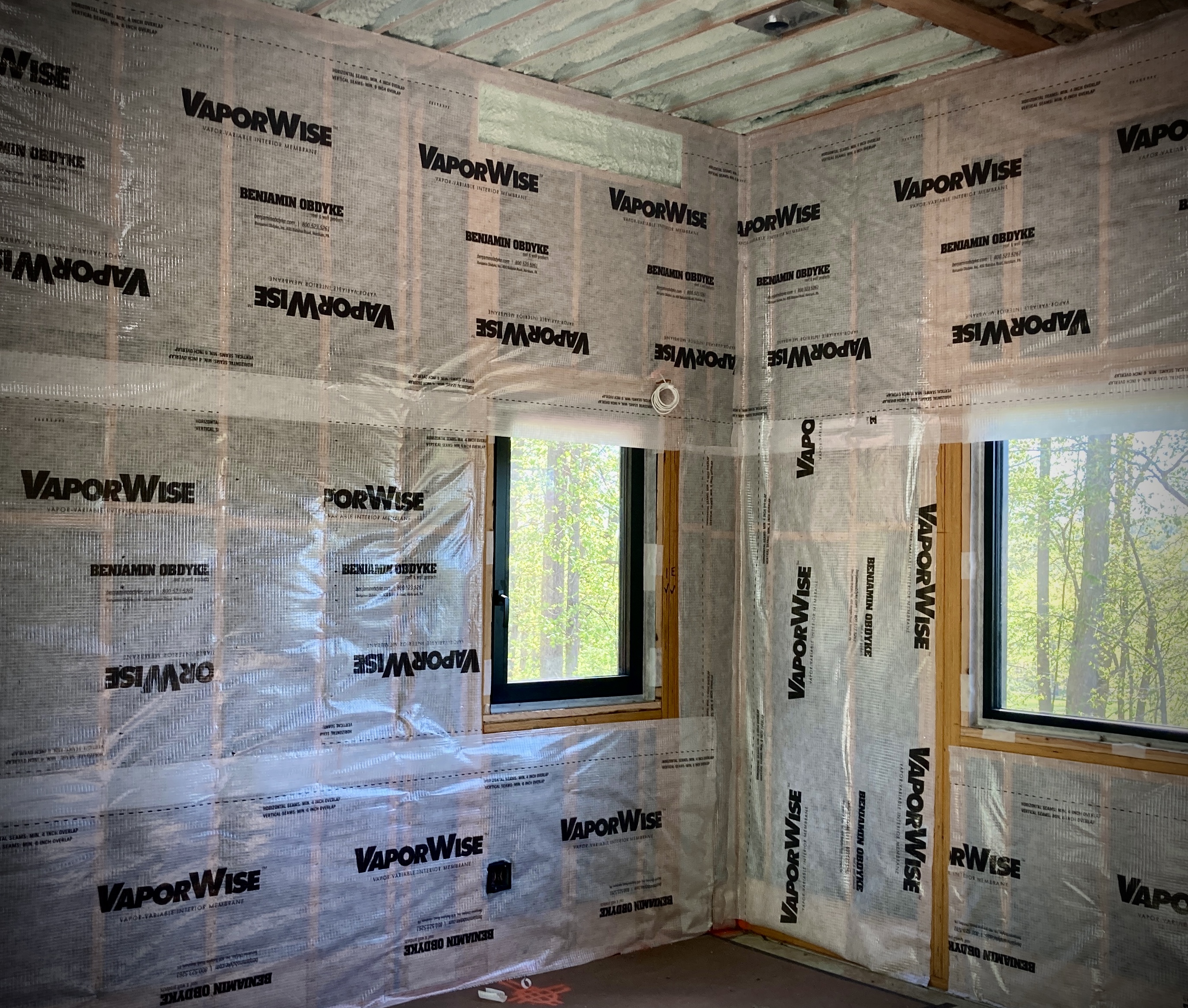
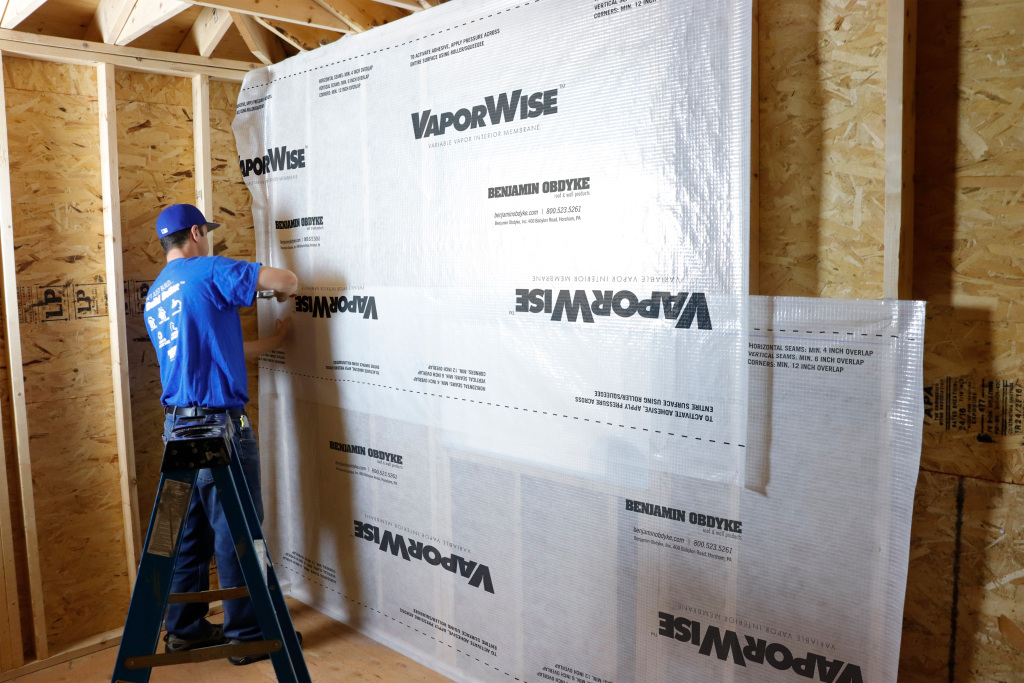
For vapor retarders, Benjamin Obdyke offers VaporWise™, a smart vapor retarder that, depending on the seasonal relative humidity, has a functional vapor permeance range from 0.14 (class II) to 14 (open/permeable). In colder, low-humidity winter months, VaporWise blocks vapor diffusion, preventing interior-generated vapor from entering the assembly and condensing on the cold exterior-sided surface in the assembly. In warmer, higher-humidity summer months, it allows interior-generated vapor to migrate through the assembly and dry out.
VaporWise can also be installed/detailed as an air barrier, and it features a reinforced grid layer for added strength, making it suitable for use with blown-in and dense-pack insulation materials.
VaporWise™ Samples
GET YOUR FREE VAPORWISE™ SAMPLES TODAY
Get the Right Support for Systems-Based Wall Designs
A systems approach to wall design can ensure proper specification and installation of air barriers and vapor barriers. To get started, contact Benjamin Obdyke today to set up a virtual jobsite visit.