Cedar and metal roofs are sought-after materials, with their aesthetics and elegance being particularly popular for high-end custom homes. But building a roof that lasts relies on proper weatherization underneath, and for these roofing materials, that includes a drainage space to prevent trapped moisture. AeroNet, an innovative rolled ventilation mat recently introduced by Benjamin Obdyke, addresses that need in an easy, effective way.
Drainage Requirements for Cedar and Metal Roofs
Wood roofing installed directly onto the roof deck can trap and absorb moisture, leading to premature decay and failure. Metal has the opposite issue: Because it is impermeable, metal roofing blocks water vapor from moving through it and out of the system, which can cause condensation buildup that can corrode the metal over time.
That’s why, for both of these materials, it’s critical to design the roof system with ventilation underneath, which will allow for airflow and drainage that can dry out the underside.
How AeroNet Improves Roof Ventilation
There are multiple ways to create a rainscreen underneath roof shingles or panels, including with traditional wood furring strips. But furring strips are clunky to install and don’t provide a fully uninterrupted drainage plane. Grid systems are another option but also can be more cumbersome to install.
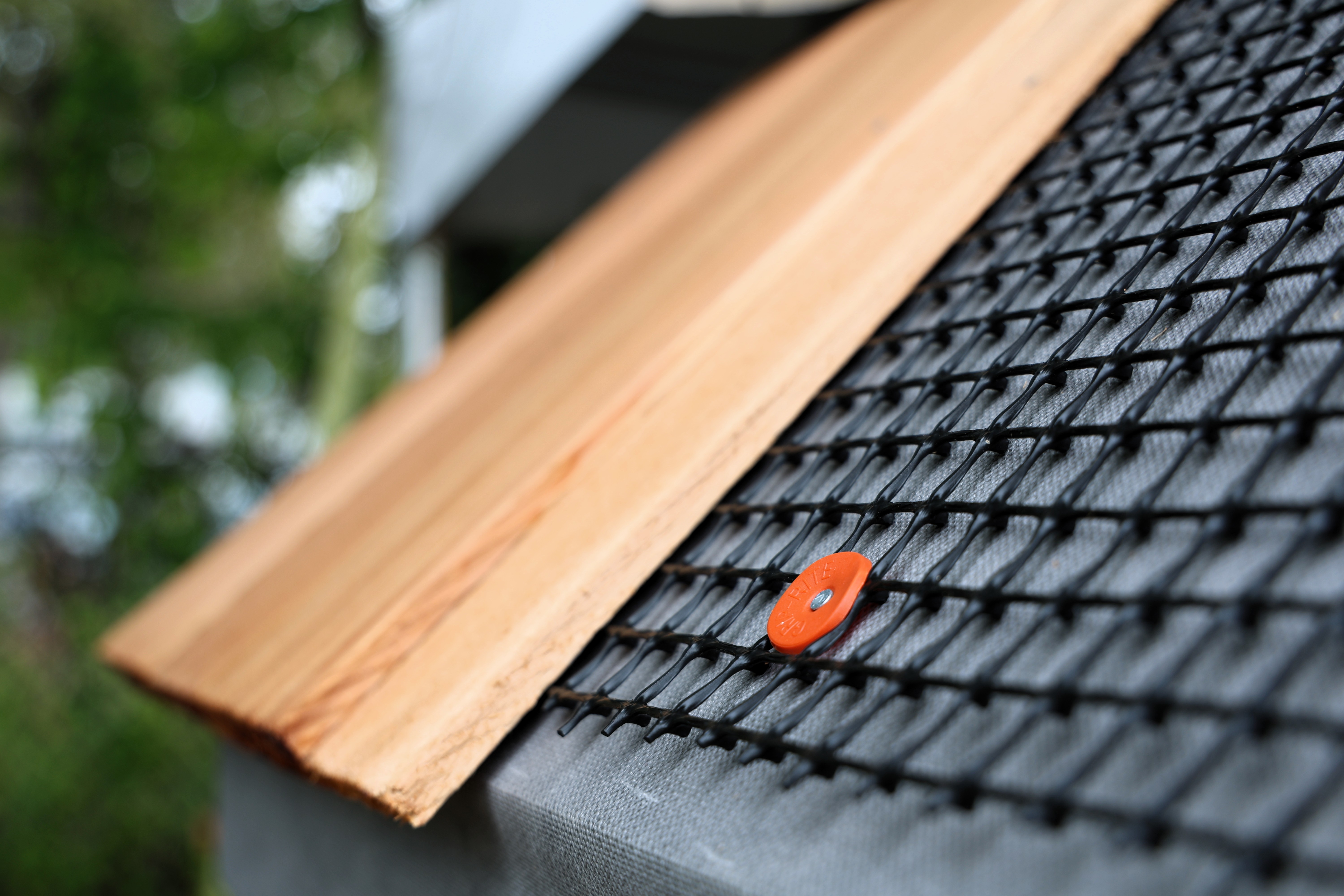
The AeroNet ventilation mat offers a fresh approach: It combines the compression strength of a traditional grid/mat system, but in a lightweight, flexible roll form that is easier to handle, carry, and install. Simply roll it onto the roof and fasten with a minimum of 1” cap nails or 7/8” staples.
Because of its grid-system style, AeroNet offers higher compression strength versus entangled net matrix products. This is important for the roof, where maintaining consistency with fastening pressure and managing the added stress of foot traffic can be challenging.
For metal roofs, higher compression strength can also help prevent oil canning.
Another benefit of AeroNet is that it can be used as a wall system rainscreen. This makes it easy for building and design pros to specify custom whole-house weatherization systems with fewer material types.
Why Properly Ventilated Roofs Are So Important
Along with bulk water from the outside climate, interior moisture vapor is an increasing problem with roof systems. As homes get tighter and conditioned attics are more common, moisture vapor is prone to become trapped in the roof assembly because it cannot escape through traditional vapor-closed systems. Combining a vapor-permeable underlayment like VaporDry SA with the AeroNet ventilation mat allows moisture vapor to move out and dry out.
Designing a roof system that promotes draining and drying can increase longevity, protect the investment in wood and metal roofing materials, and provide peace of mind for homeowners.
Have questions about integrating AeroNet into your roofing systems? Schedule a virtual training session today.