
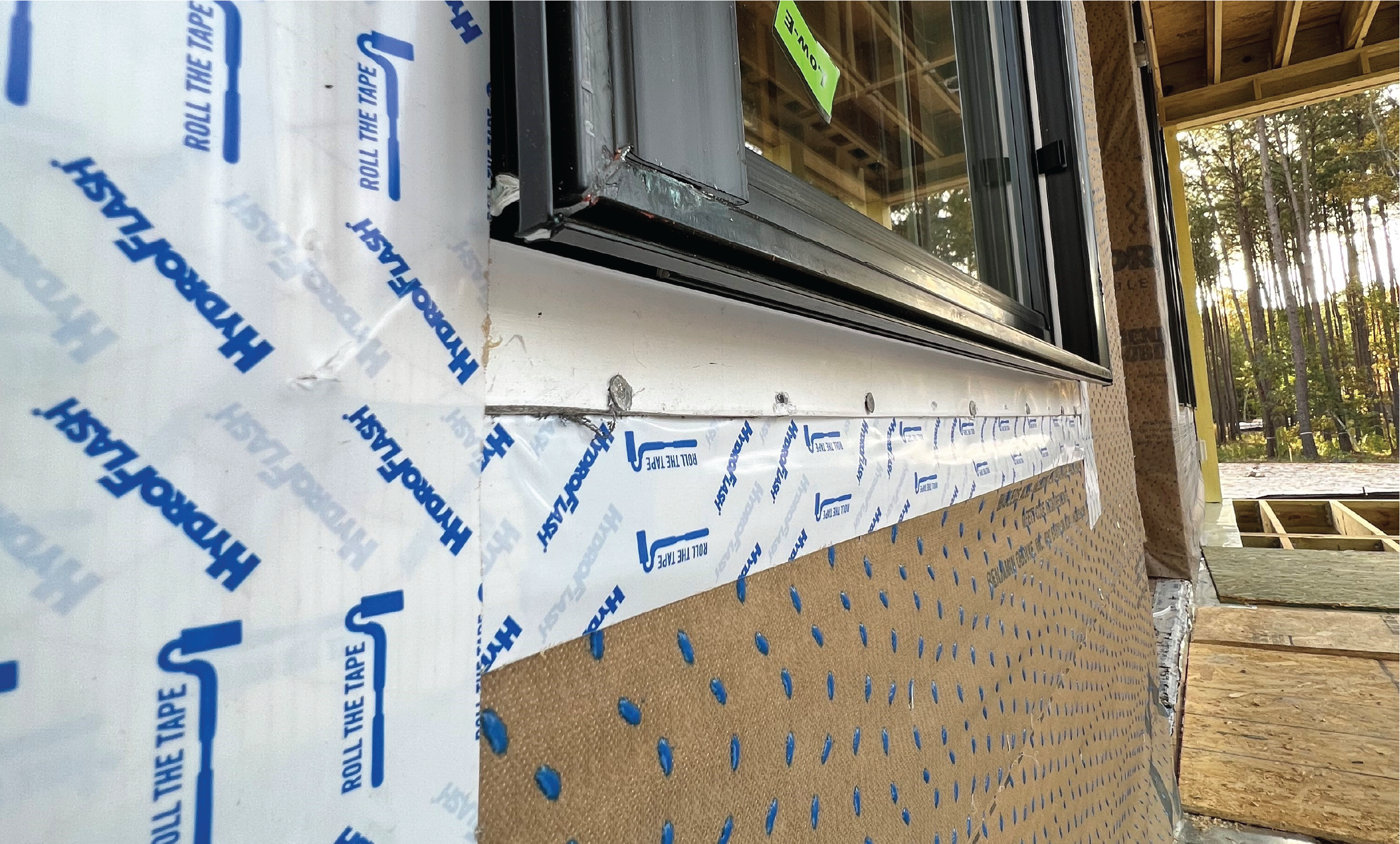
Flashing is a critical part of the building envelope, helping to block moisture intrusion and air leakage. But flashing tape can’t perform to its full potential if installed in a vacuum—window flashing must be part of a systems approach, integrated as part of a continuous drainage plane.
Why Is Flashing Critical to Wall System Performance?
Flashing is integral to the wall system’s moisture management and air sealing. In window rough openings, for example, it is used to create the sill pan, protecting the sill and creating a pathway for any moisture to drain out of the window assembly, and then to seal the flanges of the window to the wall. This helps keep moisture away from sheathing and framing members to protect an area particularly vulnerable to damage and mold.
Flashing also can be used at the wall’s sill plate to protect the transition from foundation to framing, to seal sheathing panel joints, and as seam tape when a self-adhered weather resistive barrier is being used as part of the air control strategy for improved energy efficiency.
Taking a Systems Approach to Flashing
Like the rest of the building envelope, it’s important to consider your flashing materials and installation methods ahead of time alongside the housewrap, rainscreens, ventilation methods, and more.
Thinking of the wall as a system requires consideration of their layers, including thinking of flashing as a control layer, and how to maintain continuity as you move from one area to another so that moisture and air follow the right paths scientifically proven to protect the home. Coordination between subcontractors for both timing and install methods is critical to ensure framing, windows, housewrap, and flashing are installed properly and in the correct order to ensure moisture travels down and away, rather than getting trapped. Also, plan for and require proper flashing of penetrations. (Get the details on best practices for flashing wall penetrations with these four steps.)
A systems approach also can help avoid product compatibility issues. Different materials may react to each other when they come in contact. For example, a flashing adhesive that reacts to the chemicals of a window frame could lead to a breakdown of the frame and long-term failure risk. Consult with your manufacturers on what products are compatible with others across the entire wall and roof system.
Best Practices for Flashing Tape Installation
Like any building material, flashing tape installation is straightforward, but requires attention to detail and adherence to the manufacturer’s instructions to ensure it performs as designed. Consider these important details:
• Confirm compatibility: Ensure the flashing tape and anything it’s touching (e.g., window frame, housewrap, pipes, etc.) are compatible. Otherwise, materials may react and break down sooner than designed. Check with each manufacturer to verify. Ideally, source as many materials from a single manufacturer if you can. For example, all of Benjamin Obdyke’s flashing tapes and adhesives are compatible with all of our housewraps, underlayments, and rainscreens.
• Maintain proper shingle overlapping techniques: Ensure all elements are installed in proper order to provide a pathway for moisture drainage down and out of the wall system. Reverse overlapping will allow moisture behind the WRB, where it will become trapped and lead to long-term damage.
• Apply proper pressure: Most flashing tape adhesives need to have pressure applied during installation to ensure proper integration with the substrate and to achieve predicted longevity.
• Avoid imperfections and irregularities: Install flashing as flat and smoothly as possible to avoid irregularities, such as “fishmouths,” that can create pathways and reservoirs that collect water.
• Store flashing properly: Follow manufacturer guidance for storing flashing while awaiting installation. This will help avoid weather, temperature, and UV exposure conditions that may impede the product’s performance.
A Single-Source Benefit
Along with helping to avoid compatibility issues, using wall envelope products from one manufacturer may bring added benefits. In the case of Benjamin Obdyke, a systems approach specifying our flashing, housewrap, and rainscreens together provides a more robust warranty than that of the individual products alone. It also makes training and sourcing easier.
Ready to get started specifying the right flashing products for your project? Schedule a virtual consultation today.